
- October 25, 2022
- by John Street
- 3 min. read
OSV & The Carnival Band at Cecil Sharp House
Video, photos and writeup of our concluding gig and exhibition in September 2022, in league with the magnificent Carnival Band.
The end of the research phase of the Our Subversive Voice project was celebrated with a concert at Cecil Sharp House. The marvellous, multi-instrumental Carnival Band performed a set of protest songs from across the centuries.
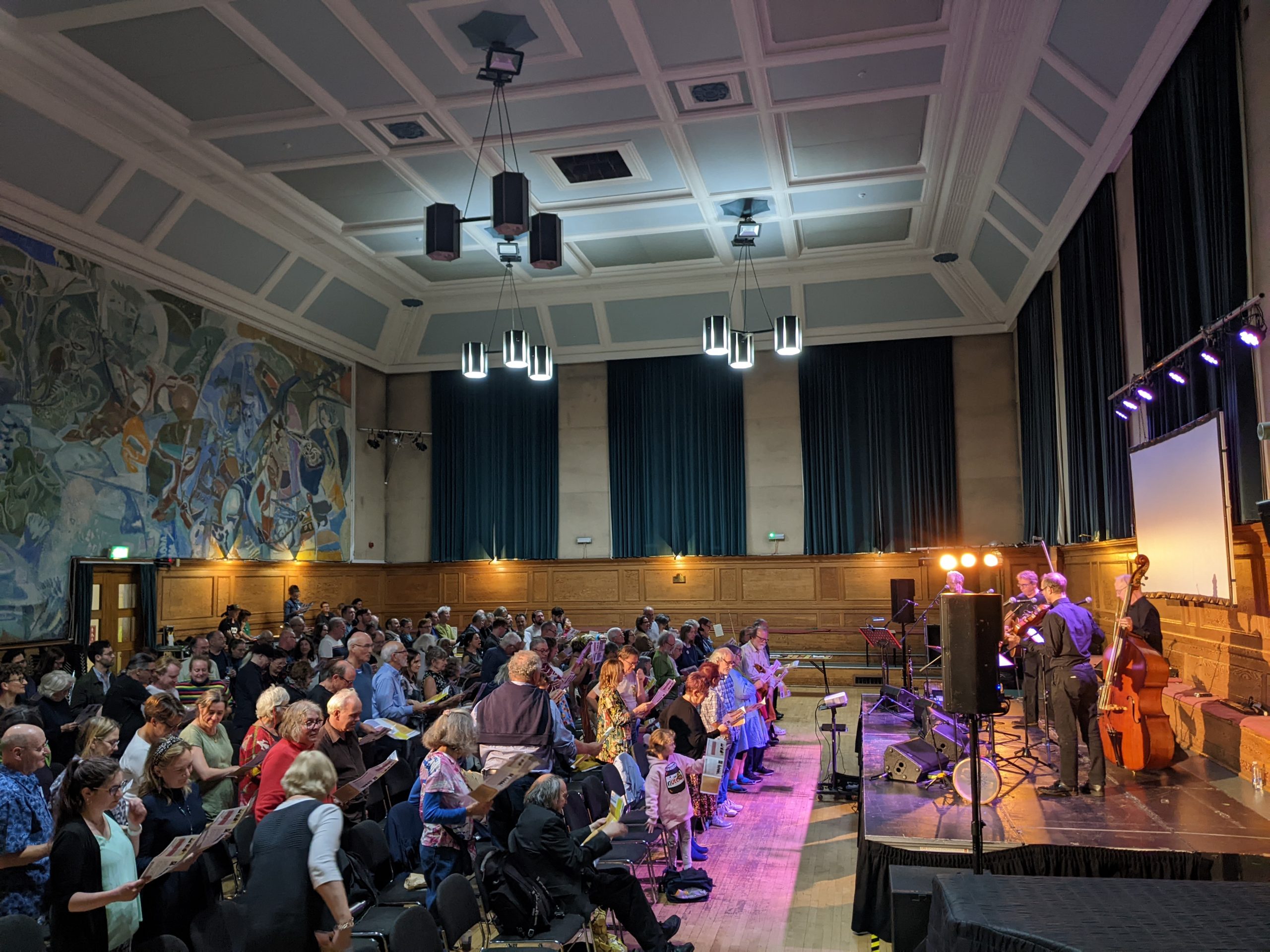
The evening’s entertainment was devised jointly by the musicans and Oskar Cox Jensen and Angela McShane of Our Subversive Voice. Its purpose was not to provide a strict chronological history of the protest song, but rather to celebrate its many forms and themes.
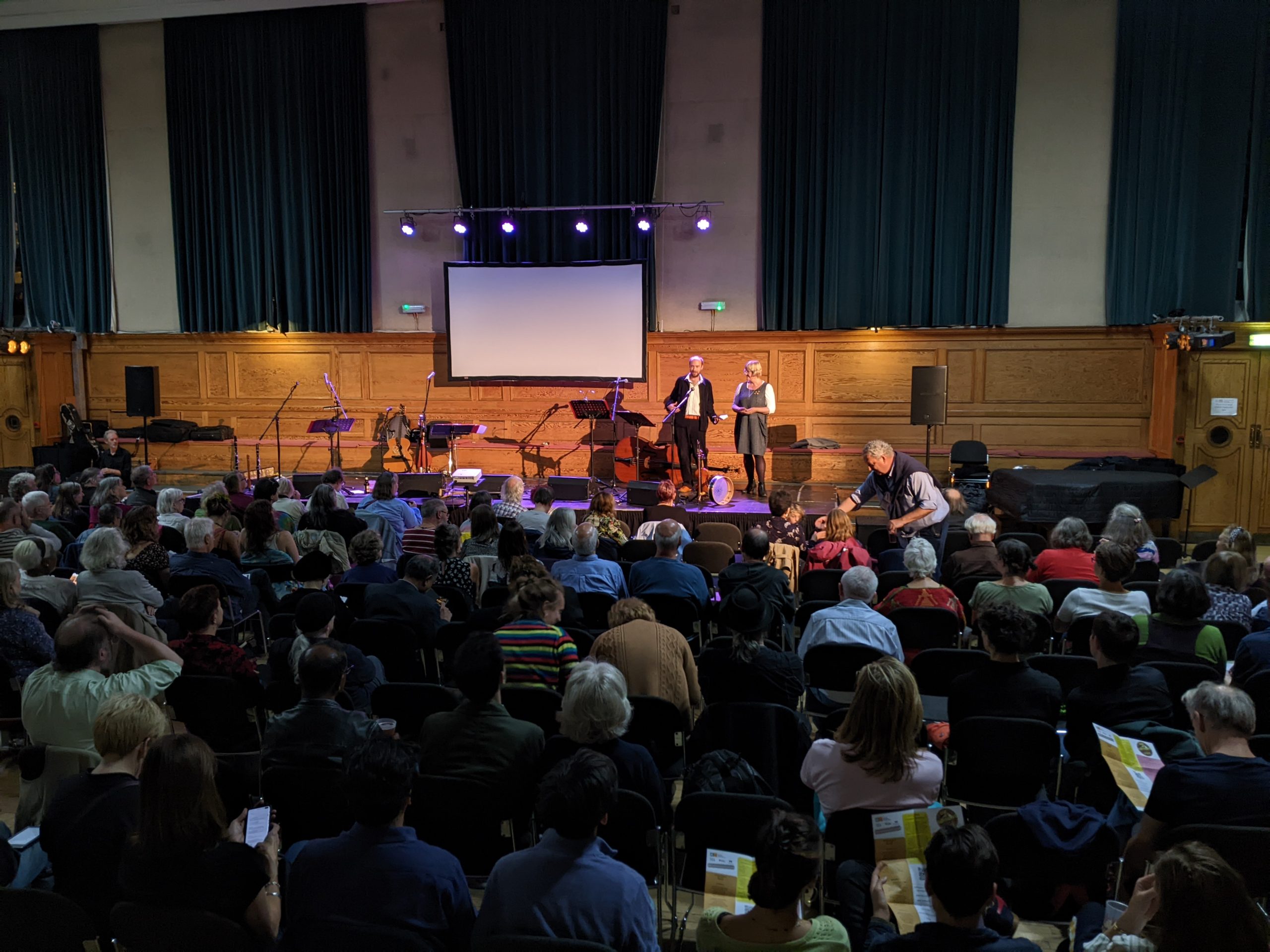
While political chaos unfolded in the world outside the Camden home of the English Folk Dance and Song Society, the Carnival Band recalled the turmoil of a much earlier era, beginning the show with The Diggers’ Song (pub. 1894):
Your houses they pull down to fright your men in town,
But the gentry must come down, and the poor shall wear the crown.
Stand up now, Diggers all

Later they were to lead the audience in singing a medley to the tune of God Save the King. ‘Down with aristocracy’, sang the audience of more than 200 – ‘Set up democracy, and from hypocrisy, save us good Lord.’
The evening saw the evocation of many different times and struggles. The women protesters at the Greenham Common peace camp were recalled by ‘Brazen Hussies’ (1983), while the right of trespassers was declaimed in Ewan MacColl’s ‘The Manchester Rambler’ of 1932. The early feminism of the suffragettes was hymned in ‘March of the Women’ (1911), as was the battle against homophobia in Tom Robinson’s ‘Glad to be Gay’ (1976).
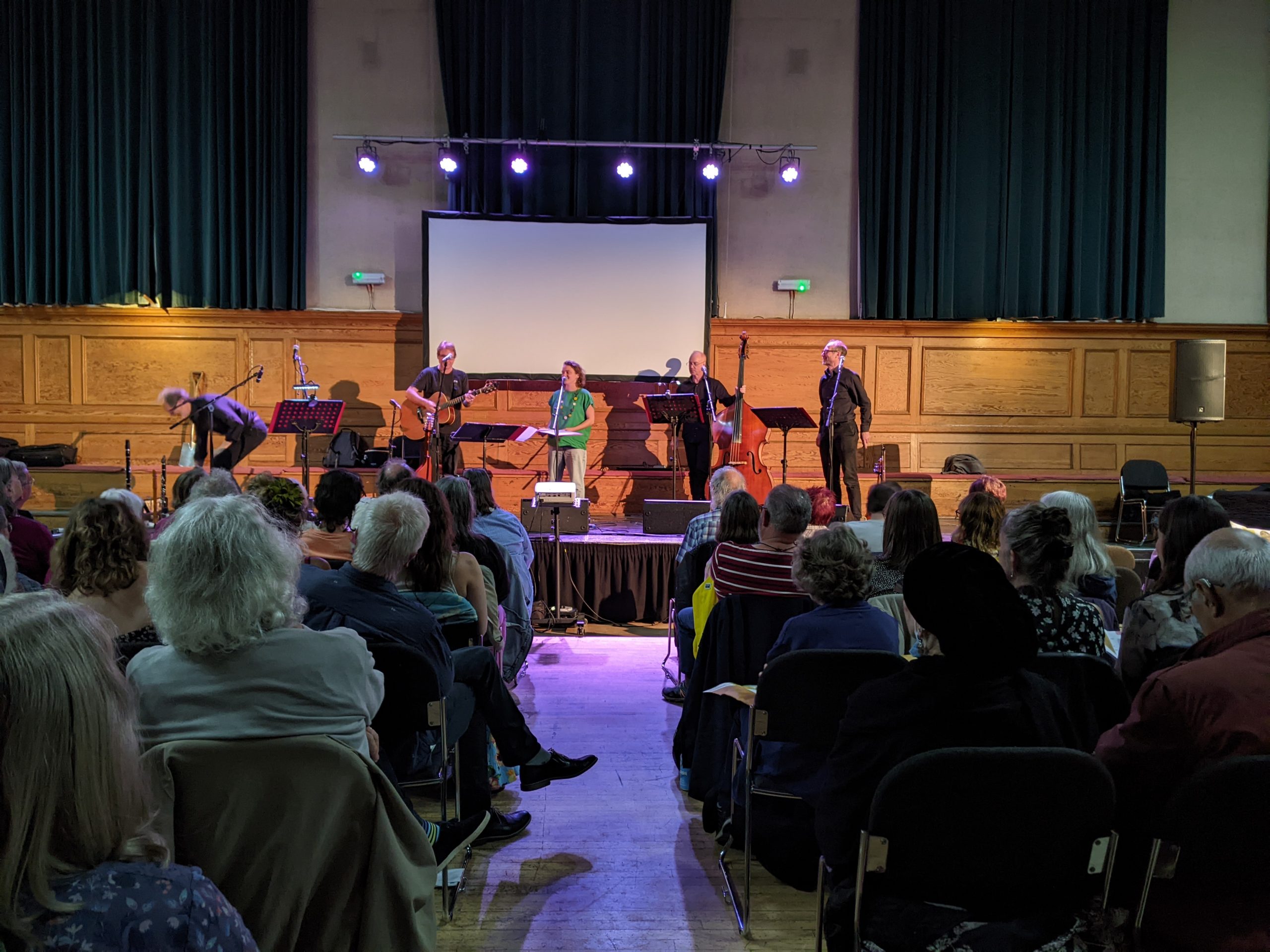
Disaster threatened when a sudden bout of laryngitis laid low singer Vivien Ellis. But the wonderful Hannah James stepped into the breach with moments to spare, in order to sing key songs.
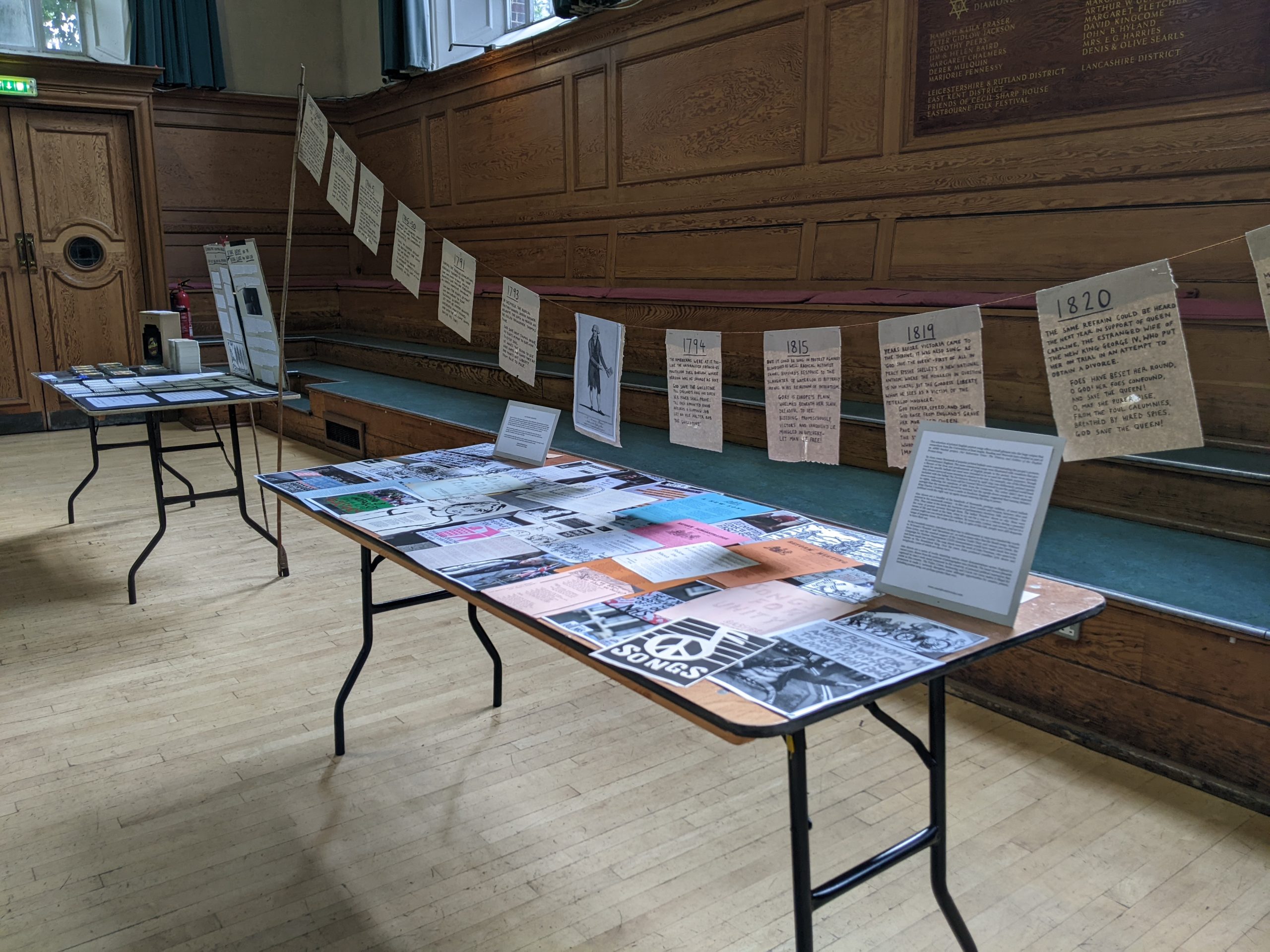
Before and after the show, the audience was able to view an exhibition, curated and created by Helen Stokes, that highlighted the multiple facets of the making and the performing of the protest song. The exhibition, like the concert, served to underline the resilience and relevance of the music of political communication.
The full set list
- 1 The Diggers' Song
- 2 Derry Down, A Medley
- 3 The Lamenting Lady's Last Farewell
- 4 Ballad of the Cloak
- 5 The Diggers' Christmas Carol
- 6 Death or Liberty
- 7 God Save the King, A Medley
- 8 Lock Jaws
- 9 The Lancashire Hymn
- 10 The Distressed Sempstress
- 11 Brazen Hussies
- 12 March of the Women
- 13 The Manchester Rambler
- 14 The World Turned Upside Down
- 15 Glad to be Gay (encore)