
- September 14, 2022
- by Alan Finlayson
- 3 min. read
OSV at Latitude Festival
Teaming up with old comrades The Common Lot, OSV spent a weekend radicalising the Faraway Forest at Latitude Festival
This summer – amidst the varied sounds emanating from Charlotte Church’s Pop Dungeon and from the crowds of enthused Massaoke singers – you could just about hear Our Subversive Voice, at Latitude Festival 2022. Our exhibition shed was small (though perfectly formed by our ‘artist in residence’ Helen Stokes). Our footprint was large. We talked, sang and generally showed off our enthusiasm for the great and powerful tradition of English protest song.
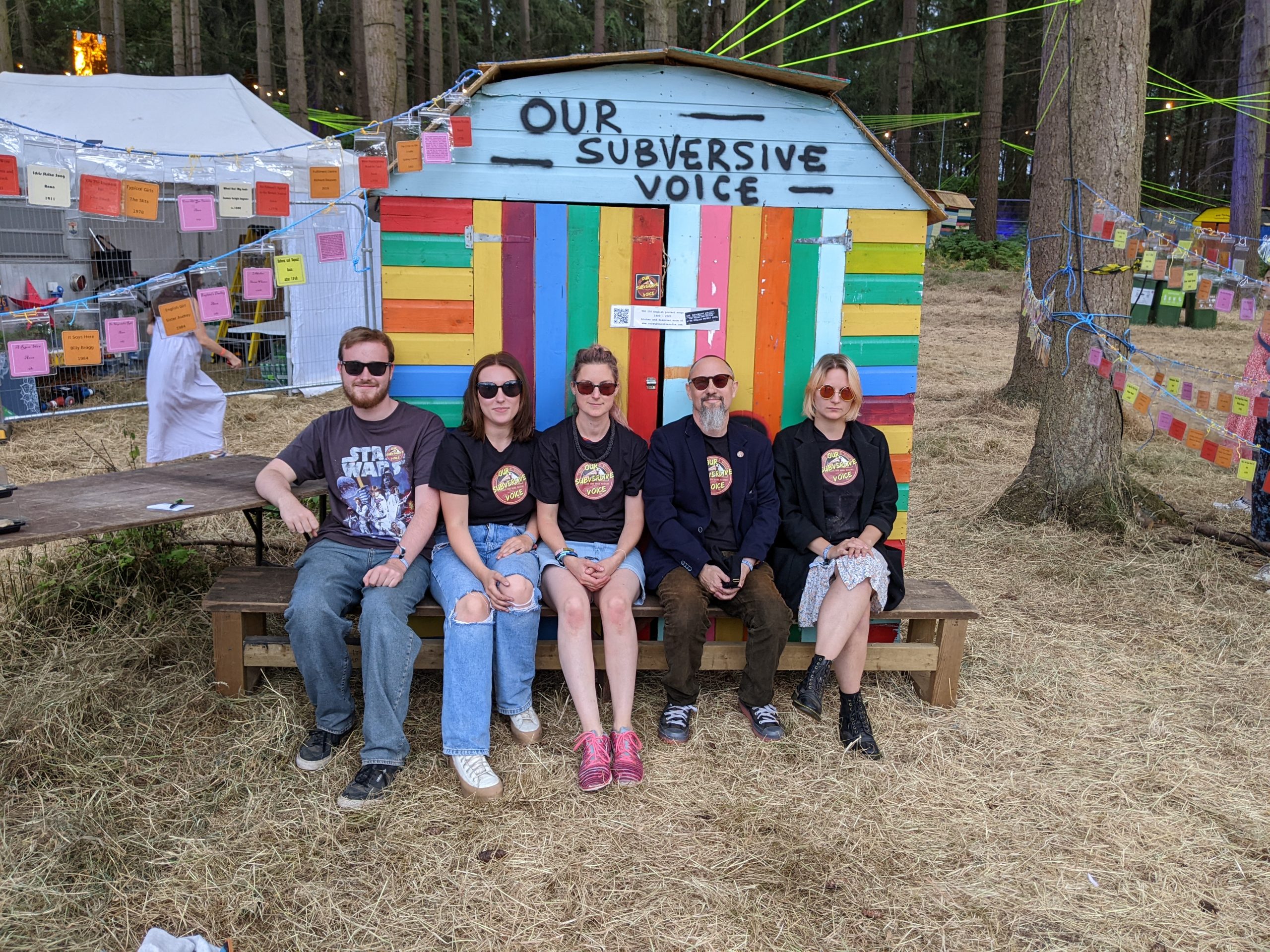

The OSV shed (before it grew)
The names and details of our 250 were strung out between trees in the ‘Faraway Forest’ – swinging in the breeze by day, reflecting the floodlights at night, and catching the eyes of hundreds of festival goers. Their immediate response was invariably a question: ‘what are they?’
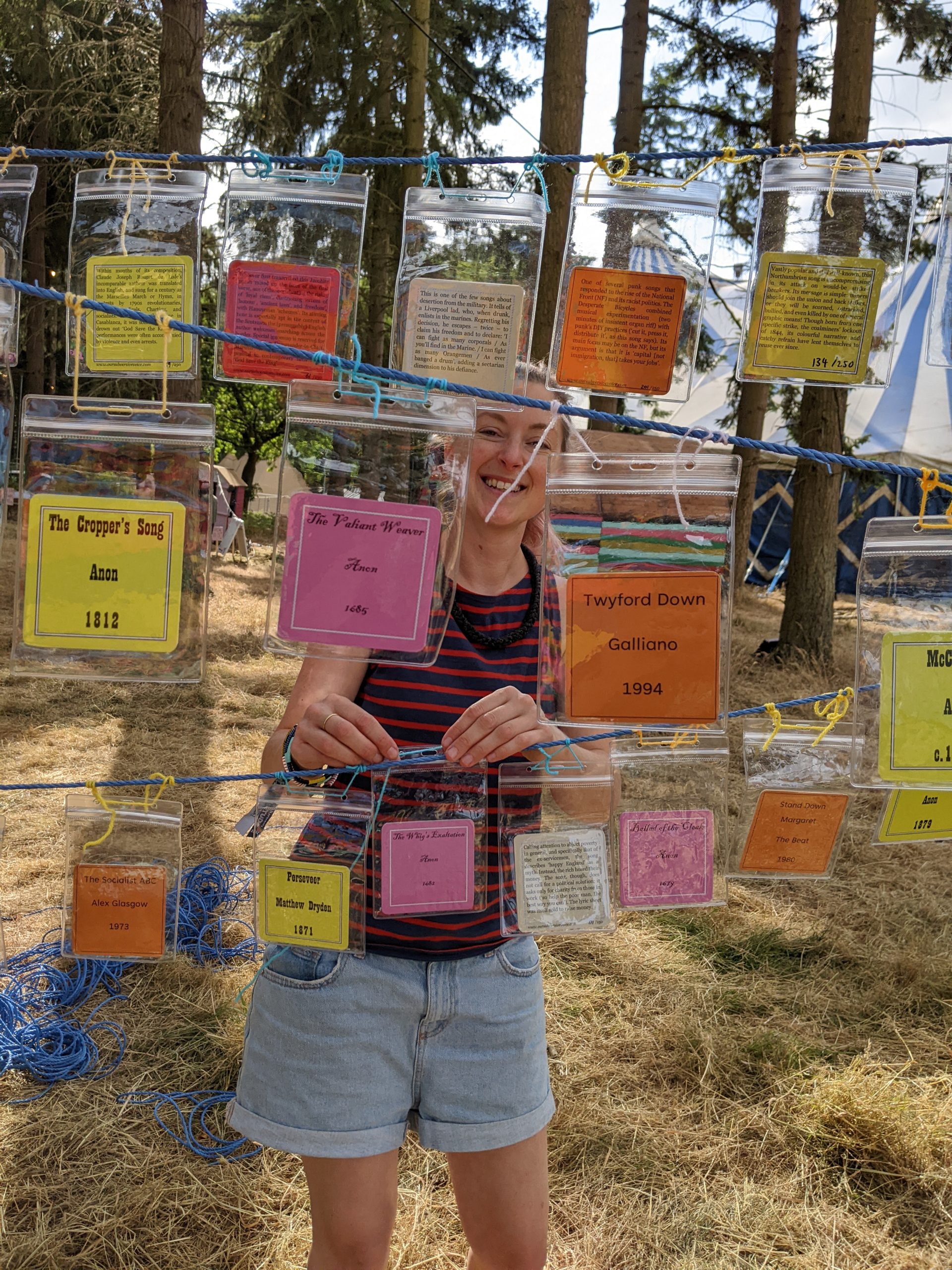
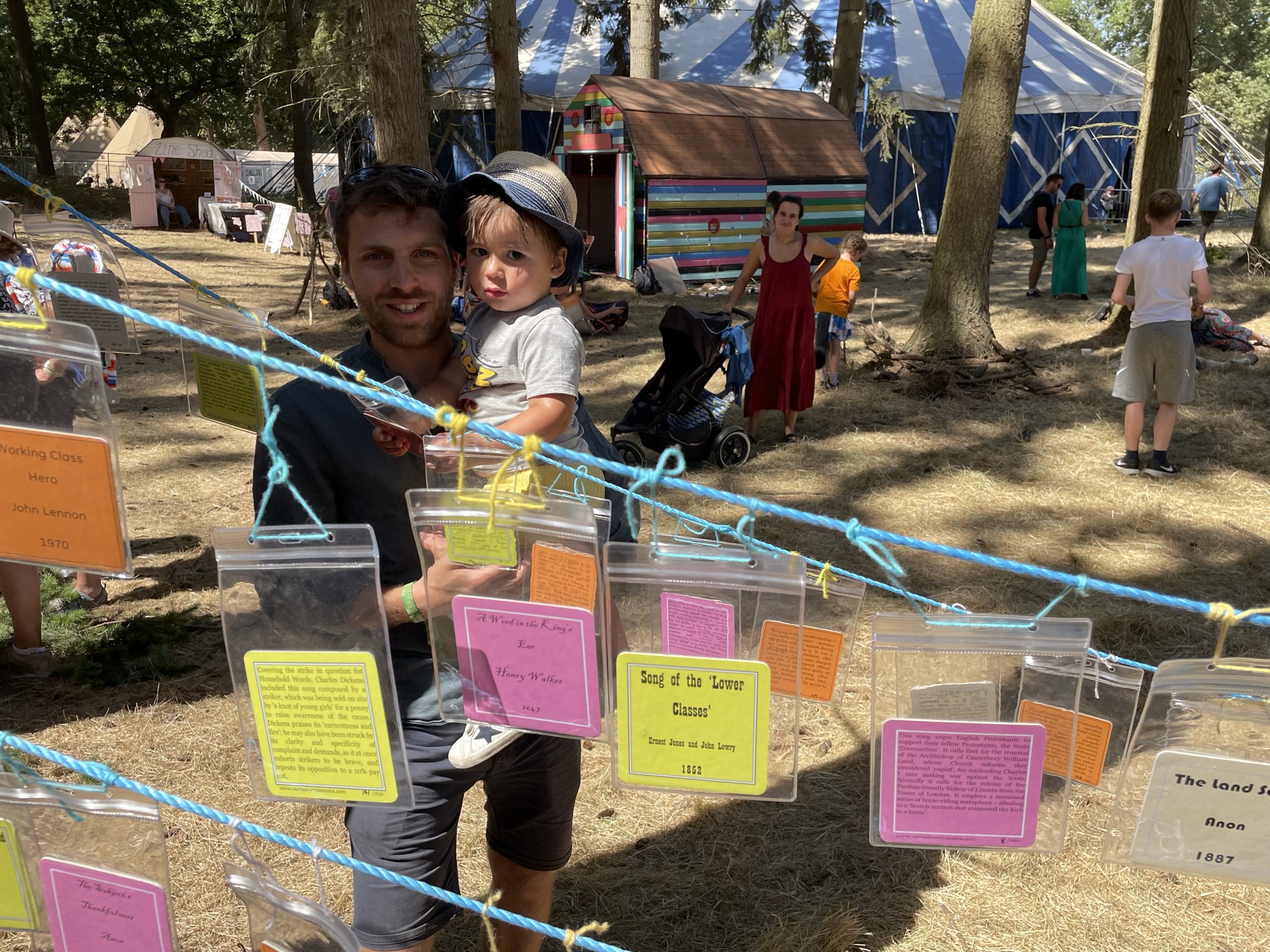
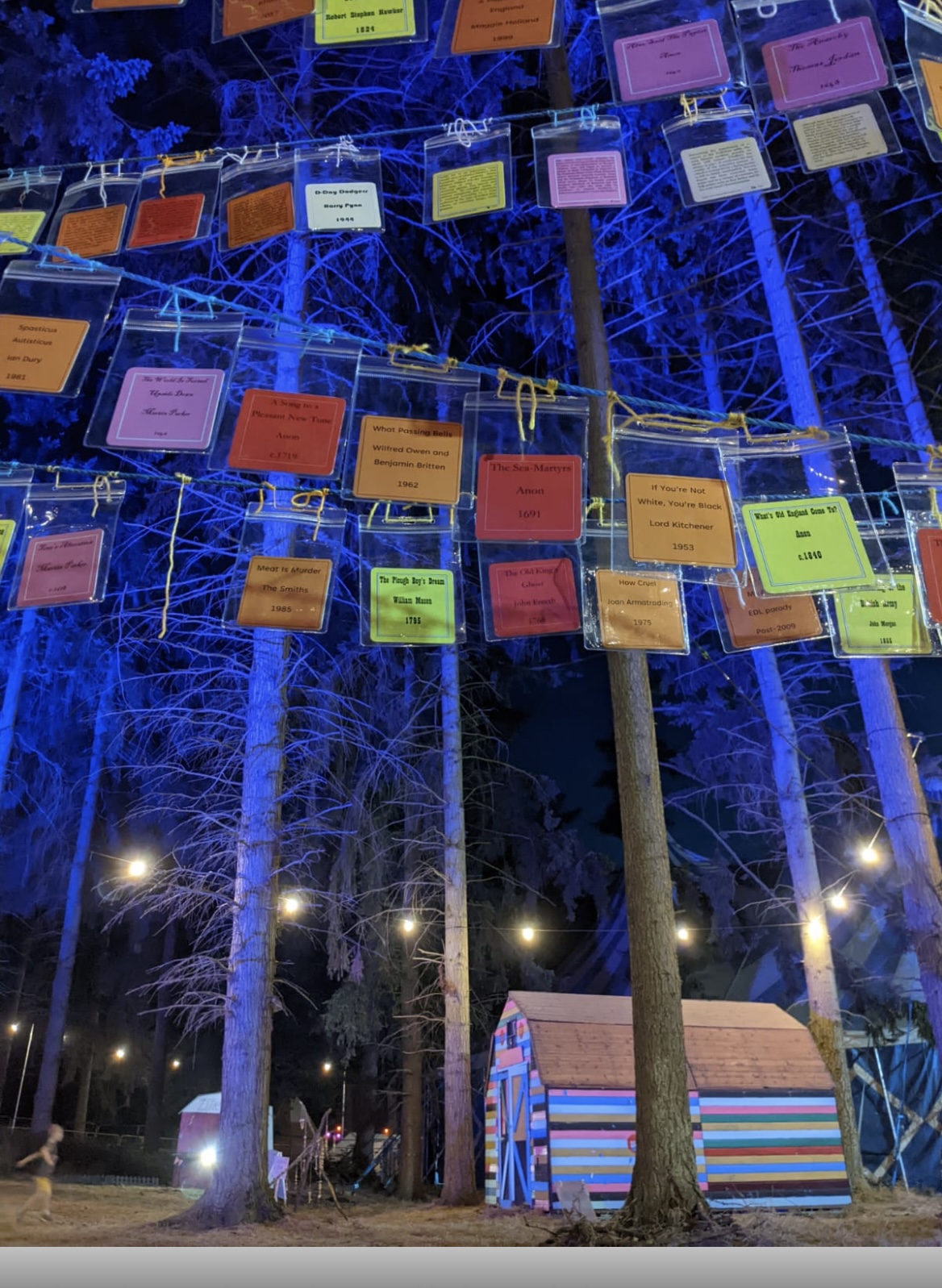
Beermats? On a washing line?
It was no surprise to us that, once they knew what it was, people were fascinated. Everybody has an opinion about protest songs – what they love or hate about them, whether or not they matter – though far fewer know just how enduring and rich is the English tradition. We spoke with a range of people – school teachers, gig promoters, actors, engineers, students, comedians, parents and their kids – and all wanted to know more. Those of a certain age had clear memories of singing ‘Free Nelson Mandela’, ‘Stand Down Margaret’ or ‘Glad to be Gay’ and were surprised to learn that their ancestors sang, with a similar spirit, versions of ‘Rule, Britannia!’, ‘God Save the King’ and ‘Jerusalem’.
Festival attendees also pitched up to hear talks from the OSV project team. Our leader John Street set his audience a quiz designed to help answer the question of where protest songs come from: are they products of politics, artists, producers, labels, social movements? Oskar Cox Jensen explained the role of songs in communicating the abolitionist cause in Georgian England, and Alan Finlayson addressed the question of Englishness because it is itself so often a question raised by protest songs.
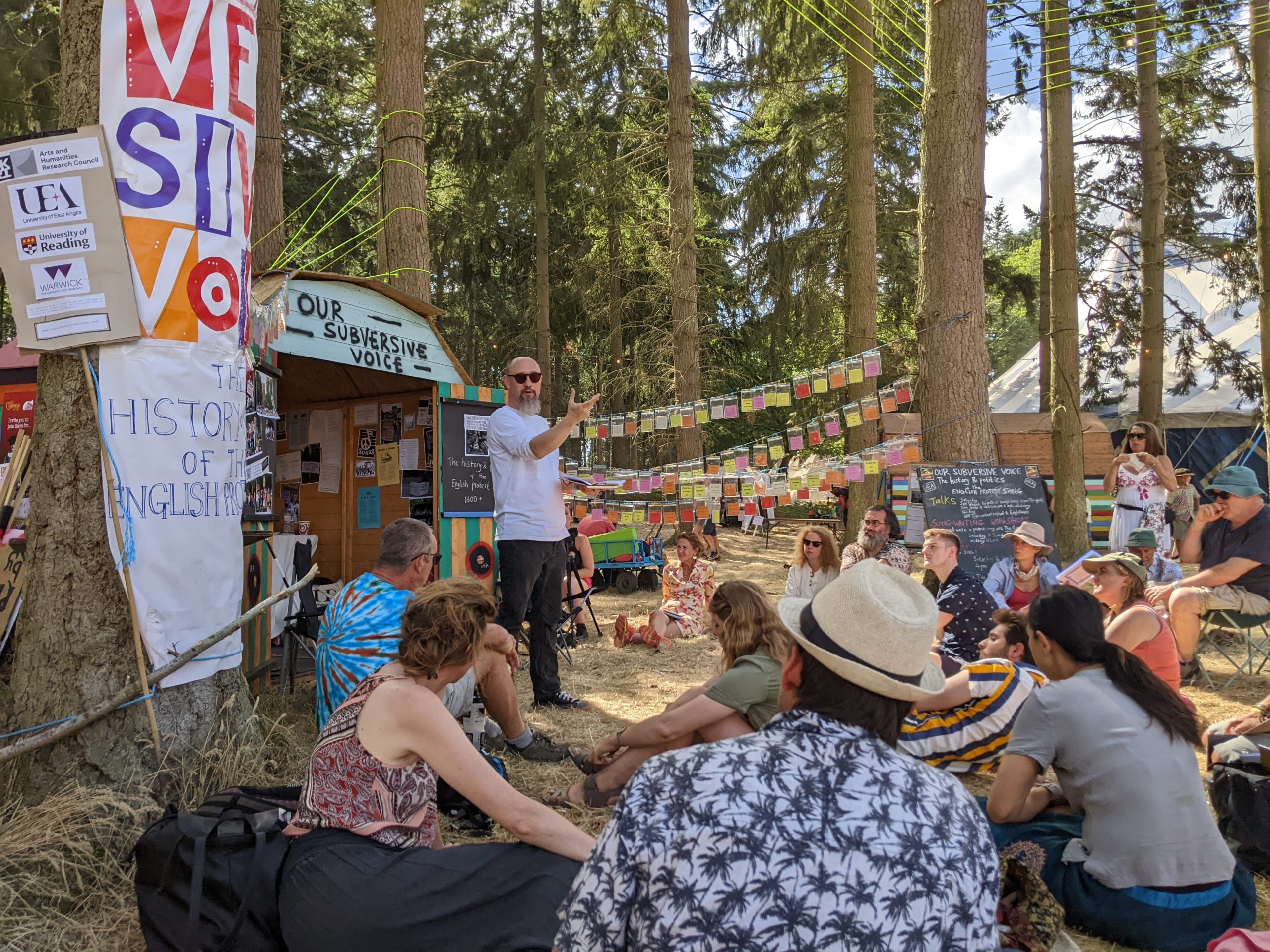
Alan Finlayson in his natural environment
Of course, you can’t understand songs just by reading and talking about them. The Common Lot, Norwich’s finest participatory community theatre group, came with us from Norfolk to Suffolk, and performed highlights from their show – devised in partnership with OSV – Songs of Hope and Protest. Well over one hundred people came to their two shows to hear songs old and new – from the suffrage anthem ‘March of the Women’ to the OSV anthem ‘God Save Great Thomas Paine’, and the Common Lot’s original ‘Song of Hope and Protest’ by their musical director Charlie Caine:
We’ll keep singing on
’till the one per cent notice
That the rest of us won’t take it anymore!
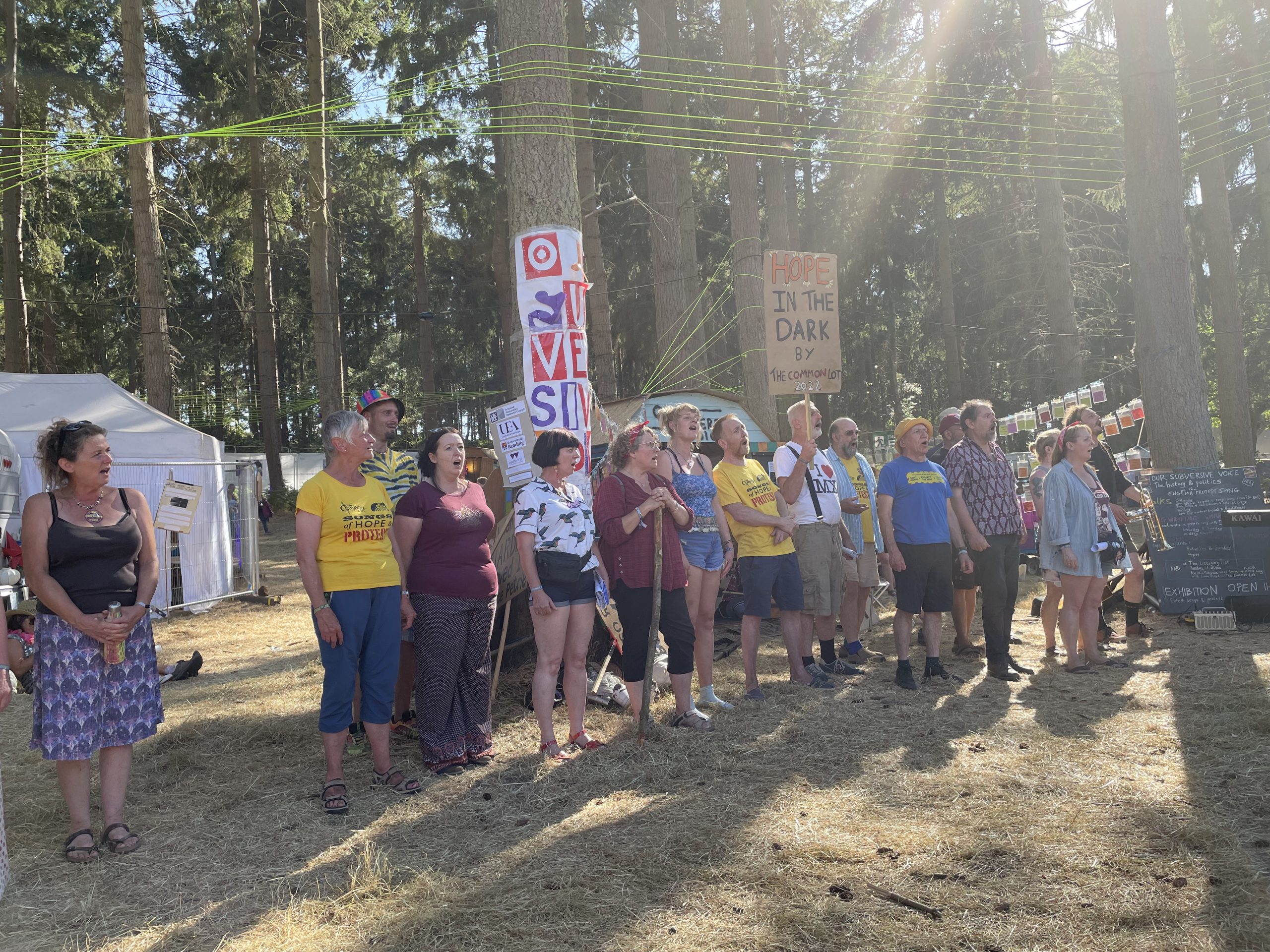
The Common Lot kick off
Meanwhile the public were asked to write down the topics and themes for their own song of protest, and at workshops with The Common Lot developed them into their own protest songs.
Including an audience of 100 at an OSV Q&A session in Latitude’s ‘Listening Post’ tent we spoke to over a thousand people in three days. What’s more – because there’s no point doing anything these days without ‘merch’ – we gave out hundreds of copies of our new OSV Songbook, plus badges, stickers and more. Only the OSV T-shirts are exclusive.
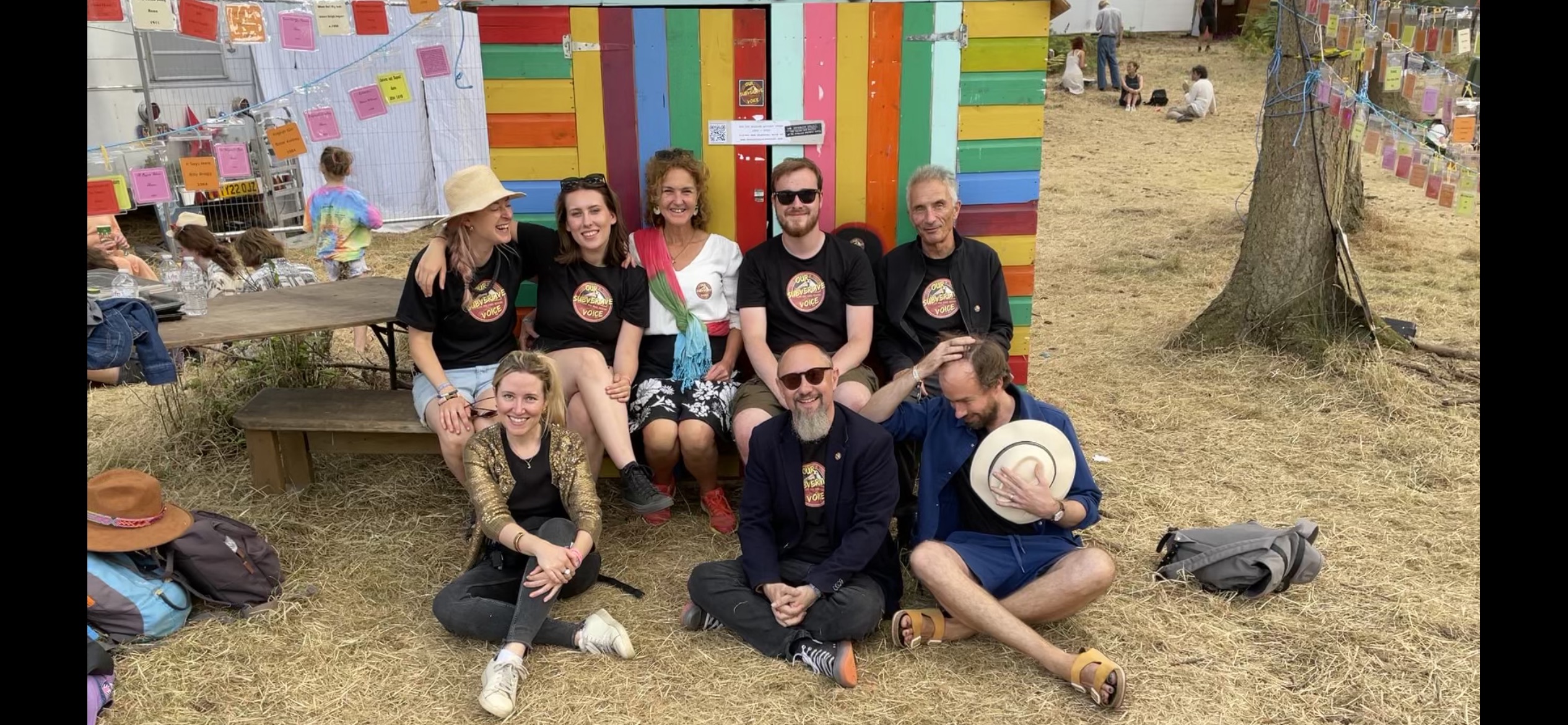
T-Shirts: Models' own
Some of our best conversations were with people from museums, other music festivals, local history associations and fan clubs. Every part of the country and all genres of music have their own tradition of protest song, connecting them to a politics of the past but also orienting them to the politics of the future.
We hope that we can speak with people again and take OSV on the road next year. But whatever happens – as our research has shown – the protest song is alive and well in all corners of England. Sometimes the noise of Westminster politics can seem to drown it out. But if you listen you will hear it. As the women of Greenham sang, in ‘Sarah’s Song’:
They can forbid nearly everything
But they can't forbid me to think
And they can't forbid my tears to flow
And they can't shut my mouth when I sing.
At right: OSV in action at Latitude, courtesy of the wonderful Jenni Shaw.
This writeup also features videos by Aimee Dexter and George Cooke, two of UEA’s first year Broadcast Journalism students.